
How to Prepare Party Jollof Rice Using ₦4,000 — A Step-by-Step Guide for Beginners
There is something about Nigerian party jollof rice that just hits differently. It's not the same as the one you make at home on a random Tuesday. Party jollof rice has that deep, smoky aroma, that rich reddish-orange colour, and that slightly charred bottom that people literally fight over at owambe parties. If you've ever wanted to recreate that exact experience at home — on a budget — you're in the right place.
The good news is that you don't need to spend a fortune to pull it off. With just ₦4,000, careful shopping, and the steps laid out in this guide, you can cook a pot of proper party jollof rice that will have everyone asking for your secret. Whether you're cooking for a small family gathering, a birthday lunch, or simply treating yourself, this guide has you covered from start to finish.
Let's get into it.
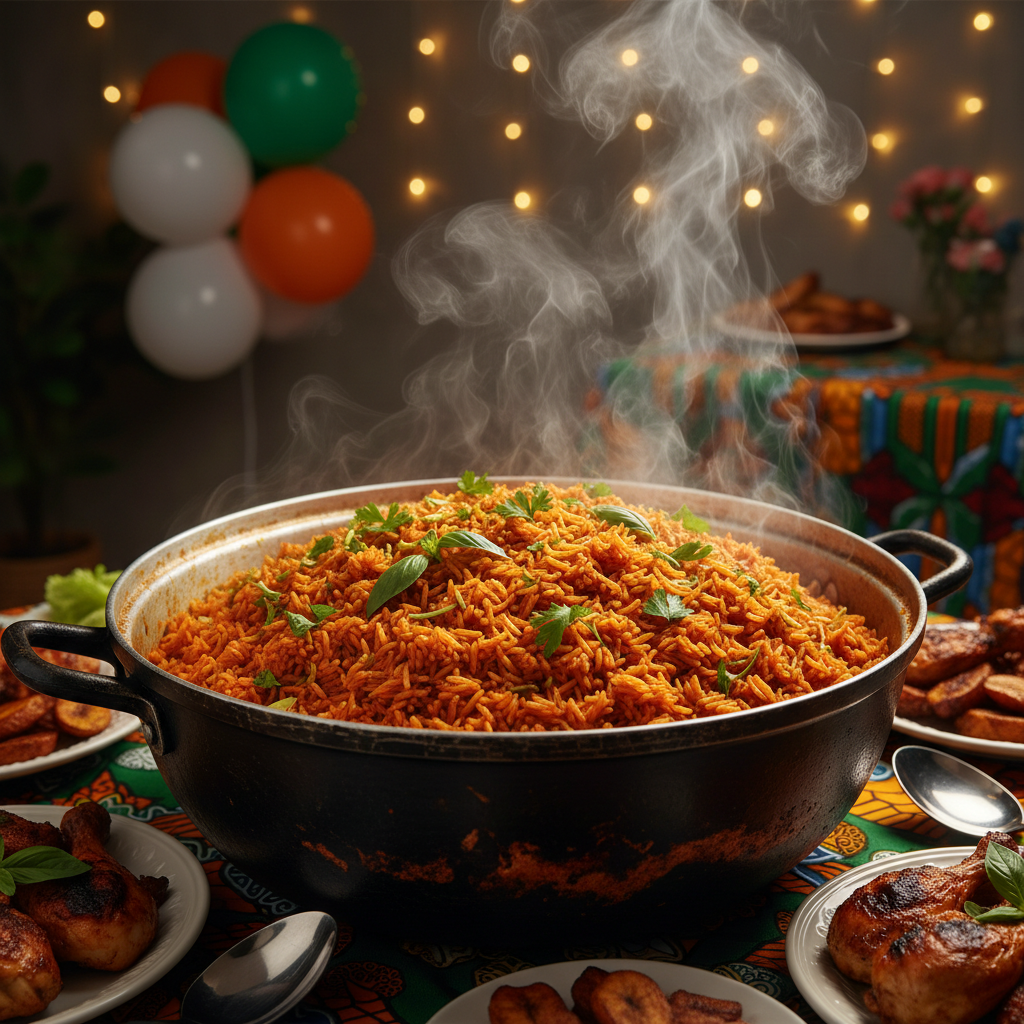
Table of Contents
- What Makes Party Jollof Rice Different?
- Ingredients and Budget Breakdown
- Health Benefits of Key Ingredients
- What You Need (Equipment)
- Getting Everything Ready (Prep Work)
- Making the Tomato Base (The Heart of Jollof)
- Step-by-Step Cooking Guide
- Getting the Smoky Bottom (The Party Jollof Secret)
- How to Serve Party Jollof Rice
- Emergency Tips — What to Do When Things Go Wrong
- Helpful Tips for the Best Results
- Frequently Asked Questions
- Conclusion
What Makes Party Jollof Rice Different?
If you've ever tasted jollof rice at a Nigerian owambe (party) and wondered why it tastes completely different from the one made at home — you're not imagining it. There are real, specific reasons for that difference.
- It's cooked over open or high heat: Party jollof is traditionally cooked over firewood or a high gas flame, which creates that signature smoky flavour. At home, you can mimic this on the stove.
- It's cooked in large quantities: The volume of rice and sauce traps steam more effectively, cooking the rice deeply from within. Even when cooking a smaller pot at home, techniques like sealing the pot tightly recreate this effect.
- The tomato base is cooked down longer: The tomato and pepper stew is fried far longer — until all moisture is gone and the oil floats freely on top. This deep, rich base is everything.
- The rice is added to the stew — not the other way around: Unlike some methods where the stew is added to boiling rice, party jollof has the rice added directly into the seasoned tomato base. This coats every grain in flavour.
- The smoky bottom (local name: "party bottom pot"): The last few minutes of cooking over high heat without stirring creates a slightly charred, intensely flavoured crust at the bottom. This is not burning — it's craft.
Now that you understand what you're aiming for, let's talk about how to get there — starting with what to buy.
Ingredients and Budget Breakdown
Here is everything you need to cook a generous pot of party jollof rice — enough to serve 6 to 8 people comfortably — for ₦4,000. Prices are based on current open market rates in most Nigerian cities and may vary slightly by location.
Rice and Base
- Long grain parboiled rice — 1 big olonka (roughly 750g) — ₦700
- Fresh tomatoes — half basket (about 6 medium) — ₦300
- Tatashe (red bell pepper) — 3 pieces — ₦200
- Rodo (scotch bonnet / habanero pepper) — 3 to 4 pieces — ₦100
- Tomato paste (small tin) — ₦200
Aromatics and Seasoning
- Onions — 2 medium — ₦150
- Garlic — 1 small bulb — ₦100
- Fresh ginger — small piece — ₦100
- Bay leaves — 3 to 4 pieces — ₦100
- Thyme — 1 small sachet — ₦100
- Curry powder — 1 small sachet — ₦100
- Seasoning cubes — 3 to 4 cubes — ₦100
- Salt — to taste (assumed at home)
Oil and Stock
- Vegetable or groundnut oil — roughly 150ml (small bottle or measured from bulk) — ₦400
- Chicken stock (from boiling a small piece of chicken or using seasoning water) — ₦500 for a small portion of chicken
Optional Extras (if budget allows)
- Green peas (frozen or fresh) — small cup — ₦200
- Sliced carrots — ₦100
- Butter — small sachet — ₦150
Estimated Total: ₦3,400 to ₦3,950 — leaving a small buffer for market variation or any extras you choose to add.
Shopping tip: Buy your tomatoes, peppers, and onions from an open market (like Mile 12 in Lagos, Wuse Market in Abuja, or your nearest local market) rather than a supermarket. You'll get significantly more for your money.
Location: Remember your location affects prices of goods, the prices stated may defer depending on your location. Remember to make your market survey of the area you're loving in.
Health Benefits of Key Ingredients
Party jollof rice isn't just delicious — when made with real, fresh ingredients, it carries a solid range of nutritional benefits. Here's what each key ingredient brings to the table:
Tomatoes and Tatashe (Red Bell Pepper)
- Rich in lycopene — a powerful antioxidant that gives tomatoes their red colour and has been associated with reduced risk of heart disease and certain cancers.
- High in vitamin C, supporting immune function and skin health.
- Contain potassium, which helps regulate blood pressure.
- Low in calories — all that flavour with minimal energy cost.
Onions
- Contain quercetin, an anti-inflammatory compound.
- Support gut health with prebiotic fibres that feed beneficial gut bacteria.
- Rich in vitamin B6 and folate, important for brain and nervous system function.
Garlic and Ginger
- Garlic has well-documented antimicrobial properties and may support heart health by helping to modestly lower blood pressure and cholesterol.
- Ginger is a natural anti-inflammatory and digestive aid — it helps reduce nausea and supports healthy digestion.
- Together, they add enormous flavour depth while contributing real nutritional value.
Scotch Bonnet Pepper (Rodo)
- Extremely high in vitamin C — much higher per gram than most citrus fruits.
- Contains capsaicin, the compound responsible for heat, which has been studied for its metabolism-boosting and anti-inflammatory properties.
- Adds the essential heat that gives Nigerian jollof its character.
Long Grain Parboiled Rice
- A good source of complex carbohydrates, providing sustained energy.
- Parboiling moves some B vitamins from the bran into the grain, making parboiled rice slightly more nutritious than regular white rice.
- Lower glycaemic index than regular white rice, meaning it causes a more gradual rise in blood sugar.
Vegetable/Groundnut Oil
- Provides fat-soluble vitamins (A, D, E, K) and essential fatty acids.
- Groundnut (peanut) oil in particular contains oleic acid, a heart-healthy monounsaturated fat found also in olive oil.
- Fat is necessary for properly absorbing the lycopene and other fat-soluble nutrients in tomatoes — so the oil in jollof actually helps your body use those nutrients better.
What You Need (Equipment)
You don't need fancy kitchen tools. Here's a simple list of what you'll need:
- A heavy-bottomed pot (aluminium or cast iron works best — it distributes heat evenly and helps develop the smoky bottom)
- A blender or food processor (to blend the tomatoes and peppers)
- A wooden spoon or sturdy stirring spoon
- A measuring cup or olonka for the rice
- A tight-fitting lid for the pot (or aluminium foil if your lid doesn't seal well)
- A kitchen knife and chopping board
- A strainer or colander (for washing the rice)
If you don't have a blender, you can buy pre-blended tomato and pepper mix from the market — usually sold in bags — but blending fresh gives a noticeably better result.
Getting Everything Ready (Prep Work)
Good prep is what separates a stressful cooking experience from a smooth one. Do all of this before you turn on the stove:
- Wash and parboil your rice: Put the rice in a pot, cover with water, bring to the boil, and cook for about 5 minutes — just until the grains are slightly softened on the outside but still raw in the centre. Drain and rinse. This step removes excess starch and ensures your grains stay separate rather than turning into a paste.
- Blend your peppers: Roughly chop your tomatoes, tatashe, rodo, half an onion, garlic, and ginger. Blend together until smooth. Don't add too much water — you want a thick, dense blend. Set aside.
- Dice the remaining onion finely. Set aside separately — this goes in first and gets fried before the blended mix.
- Prepare your stock: If using chicken, season and boil your small portion of chicken with one onion, seasoning cubes, salt, curry, and thyme. Once cooked, separate the stock (cooking water) from the meat. Reserve the stock — this is liquid gold for your jollof. If you don't have chicken, dissolve two seasoning cubes in a cup of hot water as a substitute.
- Measure out your spices — curry, thyme, seasoning cubes, bay leaves — and have them ready beside the stove.
Making the Tomato Base (The Heart of Jollof)
This step is where most of the flavour is built. Do not rush it.
- Place your pot on medium-high heat and add your vegetable or groundnut oil. Allow it to heat up for about 2 minutes — the oil should be hot but not smoking.
- Add your diced onions and fry, stirring occasionally, until they turn golden brown and smell sweet — about 5 to 7 minutes. This step releases the natural sugars in the onion and builds the flavour base.
- Add your tomato paste first. Stir it into the oil and fry for about 5 minutes, stirring continuously. This step — called "blooming" the tomato paste — removes the raw, tinny taste and deepens the colour.
- Pour in your blended tomato and pepper mixture. It will spit and sizzle — that's normal. Stir to combine, then reduce heat slightly to medium.
- Now comes the most important part: fry this tomato stew until all the water has evaporated and the oil has fully risen to the top. This takes 25 to 40 minutes depending on the water content of your tomatoes. Stir every few minutes to prevent burning at the bottom. You'll know it's ready when the stew looks thick and darker, smells deeply fragrant, and the oil sits clearly on the surface.
- Add your bay leaves, curry, thyme, and one seasoning cube. Stir and cook for another 3 minutes.
This base — properly fried, rich, and deeply flavoured — is what gives party jollof rice its soul. Every minute you spend here shows in the final result.
Step-by-Step Cooking Guide
With your tomato base ready, you're now in the final stretch. Follow these steps carefully:
- Add your chicken stock to the tomato base. Pour in enough stock (or seasoned water) to just cover the rice when it goes in — usually about 1.5 to 2 cups of liquid for every cup of rice. Taste the liquid at this point and adjust salt and seasoning. It should taste slightly saltier than you want the final rice — the rice will absorb it and balance out.
- Bring the liquid to a rolling boil over high heat.
- Add your parboiled, drained rice. Stir once to ensure everything is evenly distributed. Make sure the liquid just covers the rice — if it's too far below, add a little more stock or water. If it's too far above, you'll have soggy rice.
- Cover tightly and reduce heat to low-medium. If your pot lid doesn't seal well, cover the pot with a sheet of aluminium foil before placing the lid on top. This traps the steam inside and cooks the rice evenly from all sides.
- Cook for 20 to 25 minutes without lifting the lid. Resist the urge to check. Every time you lift the lid, you release steam that the rice needs to cook through.
- After 20 minutes, check the rice. Dig a spoon gently to the bottom without stirring. If all the liquid has been absorbed and the rice grains are fully cooked and separate, you're nearly there. If there's still liquid, cover and cook for another 5 to 10 minutes.
- Add butter (optional) at this stage by placing a small knob on top of the rice before covering again for 5 minutes. It melts into the rice, adding a rich, slightly glossy finish that elevates the whole dish.
- Add your green peas and carrots (optional) in the last 5 minutes of cooking. They don't need much heat — just enough to warm through and soften slightly while keeping their colour.
Getting the Smoky Bottom (The Party Jollof Secret)
This is the step that transforms good jollof into proper party jollof. It's simple — but it requires confidence and attention.
- Once your rice is fully cooked and all liquid has been absorbed, turn the heat up to high.
- Do not stir. Do not lift the lid. Leave the pot on high heat for exactly 3 to 5 minutes.
- You'll start to smell a faint smoky, slightly toasty aroma rising from the pot. That's the bottom developing that famous charred crust. This is the smell of party jollof rice. It should smell smoky — not acrid or like burning plastic.
- After 3 to 5 minutes, turn the heat off completely. Leave the pot covered for another 5 minutes to let the heat redistribute and the bottom crust settle.
- When you open it, use a long spoon to gently scrape the bottom of the pot and fold that slightly charred layer into the rice. This distributes the smoky flavour throughout the pot.
Important: The difference between a smoky bottom and burnt rice is time and heat level. 3 to 5 minutes on high heat creates the party jollof crust. Much longer and you'll have burnt rice. Stay close during this step — don't walk away.
How to Serve Party Jollof Rice
Party jollof rice is always better when it rests for a few minutes after cooking before being served. This allows the steam to redistribute evenly through the pot.
Classic serving combinations:
- Jollof rice + fried chicken or grilled chicken
- Jollof rice + peppered goat meat or beef
- Jollof rice + fried plantain (dodo) — this combination is practically sacred
- Jollof rice + coleslaw and moi moi for a full party plate
- Jollof rice on its own with a cold drink — also completely valid
Serve on a wide, flat plate rather than a deep bowl when possible — it shows off the colour and texture better. A garnish of fresh sliced tomatoes or cucumber on the side adds colour and freshness to the plate.
Emergency Tips — What to Do When Things Go Wrong
Even experienced cooks have jollof emergencies. Here's how to handle the most common ones:
🚨 The rice is burning before it's cooked through
Turn the heat down immediately to the lowest setting. Add 2 to 3 tablespoons of water or stock around the edges of the pot (not in the centre — this disturbs the rice), cover tightly, and allow the steam to finish cooking the rice gently. Do not stir — this can make the burnt bottom mix through the whole pot.
🚨 The rice is fully cooked but too watery/soggy
Remove the lid completely and turn the heat up to medium-high. Allow the excess moisture to evaporate, stirring gently every 2 minutes. If it's very soggy, spread the rice out on a flat baking tray and put it in the oven (if available) at 180°C for 10 minutes — this dries it out without making it worse.
🚨 The tomato base is burning during frying
Turn the heat down immediately and add a splash of water or stock. Stir vigorously to lift any stuck bits from the bottom. A slight sticking is manageable — if it smells acrid, transfer the stew to a clean pot immediately, leaving the burnt layer behind.
🚨 The rice tastes bland after cooking
Dissolve half a seasoning cube in 2 tablespoons of warm water. Pour it evenly over the cooked rice, cover the pot, and leave on very low heat for 5 minutes to allow the seasoning to absorb into the grains. Stir gently before serving.
🚨 The rice is undercooked and you've run out of stock
Add plain hot water — a little at a time — around the edges of the pot. Cover tightly and cook on low heat for another 10 to 15 minutes. Hot water is always better than cold water here — cold water can shock the rice and cause uneven cooking.
🚨 You accidentally over-salted
Add a small, peeled raw potato cut into chunks and stir it into the rice. Leave for 10 minutes — the potato absorbs excess salt. Remove the potato pieces before serving. Alternatively, adding a small amount of unseasoned cooked rice (if available) and mixing it in dilutes the saltiness.
Helpful Tips for the Best Results
- Never use freshly unparboiled rice directly. Always parboil first. This is the single biggest difference between jollof rice that turns to mush and jollof rice that is perfectly separate and fluffy.
- Fry your tomato base completely. The number one mistake in jollof rice is under-frying the tomato stew. If there is still water in the base when you add the rice, the result will be sour, watery, and flat-flavoured. Fry until the oil floats — no shortcuts.
- Use long grain parboiled rice. Regular short-grain or locally grown swamp rice does not hold up well in jollof. Long grain parboiled rice keeps its shape, absorbs flavour without going mushy, and gives you that beautiful separate grain texture.
- Your stock ratio matters. Too much liquid = soggy rice. Too little = undercooked rice. A good rule: the liquid should sit about 1 cm above the surface of the rice when you add it to the pot.
- Seal your pot. Steam is what cooks jollof rice from above. If your lid doesn't fit tightly, use aluminium foil as a seal. This is not optional — it's the difference between steamed, fluffy grains and half-cooked, uneven rice.
- Don't lift the lid repeatedly. Every lift releases steam and extends your cooking time. Check once at the 20-minute mark, make any adjustments, then leave it.
- Let it rest before serving. 5 minutes off the heat with the lid on allows the rice to settle, the moisture to redistribute, and the flavours to come together. It's a small step that makes a real difference.
- Taste as you go. Season your tomato base, your stock, and your final rice at each stage. Jollof rice that's been properly seasoned throughout needs very little correction at the end.
- Cook on medium heat, not high, for most of the process. High heat is only for the final smoky bottom stage. Patience with low-medium heat is what builds depth of flavour.
Frequently Asked Questions
Conclusion
Party jollof rice is one of those dishes that looks complicated from the outside but is very learnable once you understand the logic behind each step. The tomato base is the foundation — fry it until it's truly ready. The stock is the flavour vehicle — season it well. The sealed pot is the cooking environment — respect it. And the smoky bottom is the finishing touch — trust yourself enough to do it.
With ₦4,000, fresh ingredients from your local market, and the steps in this guide, you have everything you need to make a pot of rice that tastes like it came from an owambe. No catering team required.
Start with this recipe once, follow it closely, and see how it turns out. The second time, you'll already know where to adjust — a little more pepper, a longer fry on the base, a bolder smoky finish. Cooking is a skill that builds with each attempt, and jollof rice rewards every effort you put into it.
Cook it, share it, and enjoy every grain.
Tried this recipe? Tell us how it went in the comments below. At Cheap Naija Meals, we believe great food doesn't have to cost a fortune — and party jollof rice is proof of exactly that.
If you have a suggestion, feel free to comment!